


Look, I get it. You’re sitting at a wine bar, the sommelier comes over with a bottle of Tasmanian sparkling and hits you with the line: “It’s basically Champagne, but from Australia. And way cheaper.”
And you nod. You taste it. It’s excellent. But it’s not Champagne. The great thing is that it doesn’t have to be.
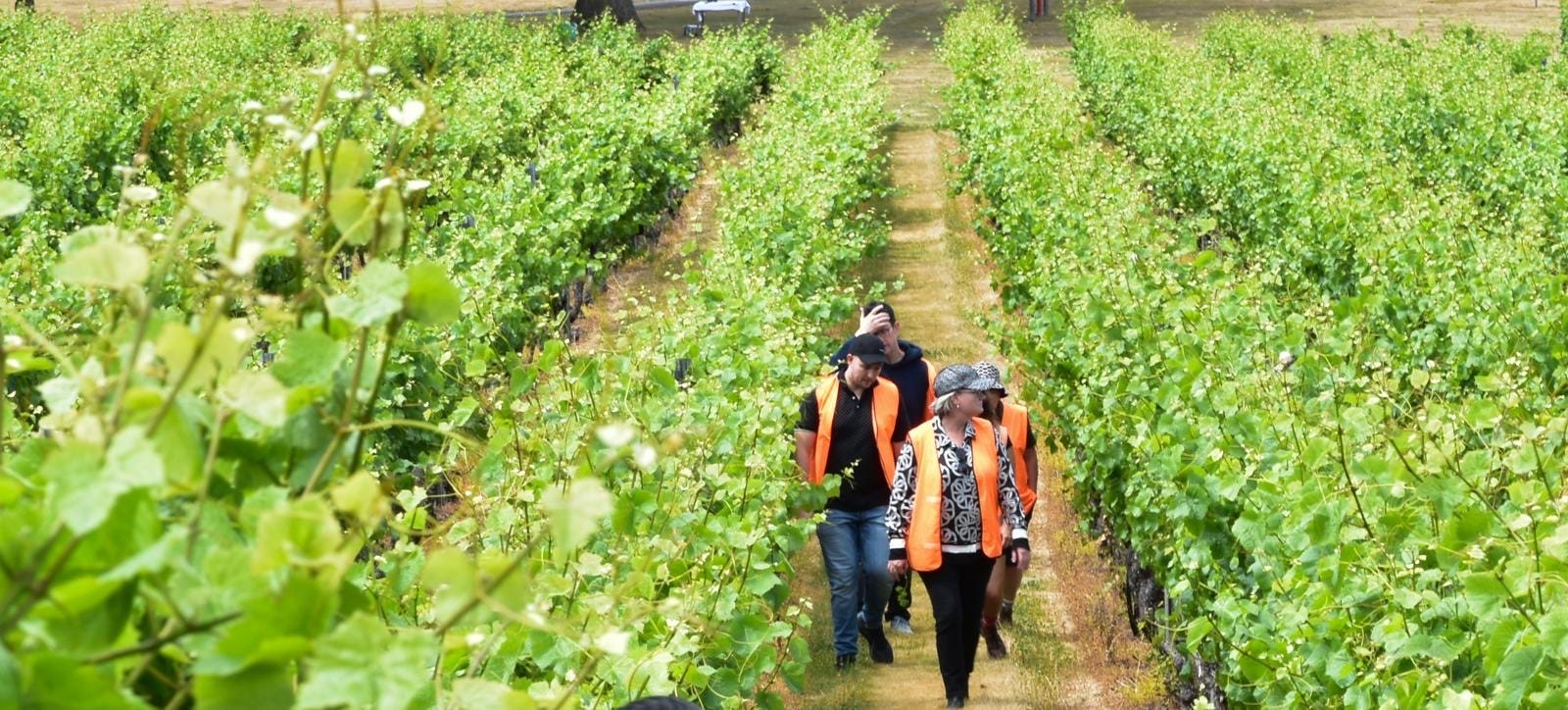
After spending five days in Tasmania tasting my way through their sparkling wine scene (and over 200 other wines) - from established houses like House of Arras to tiny producers bottling méthode traditionnelle - I’m here to tell you: we need to stop this comparison nonsense.
Not because Tasmanian sparkling isn’t world-class. It absolutely is.
But because calling it “a more affordable alternative to Champagne” is like calling Singapore “a more affordable London.” Sure, there are some similarities, the entire point is kinda missed.
The “Champagne Comparison” Trap (And Why We All Fall Into It)
We do this because it’s easy. Champagne is the reference point everyone understands. It’s the gold standard. If you want to sell premium sparkling wine, you invoke the C-word and watch people’s wallets open up.
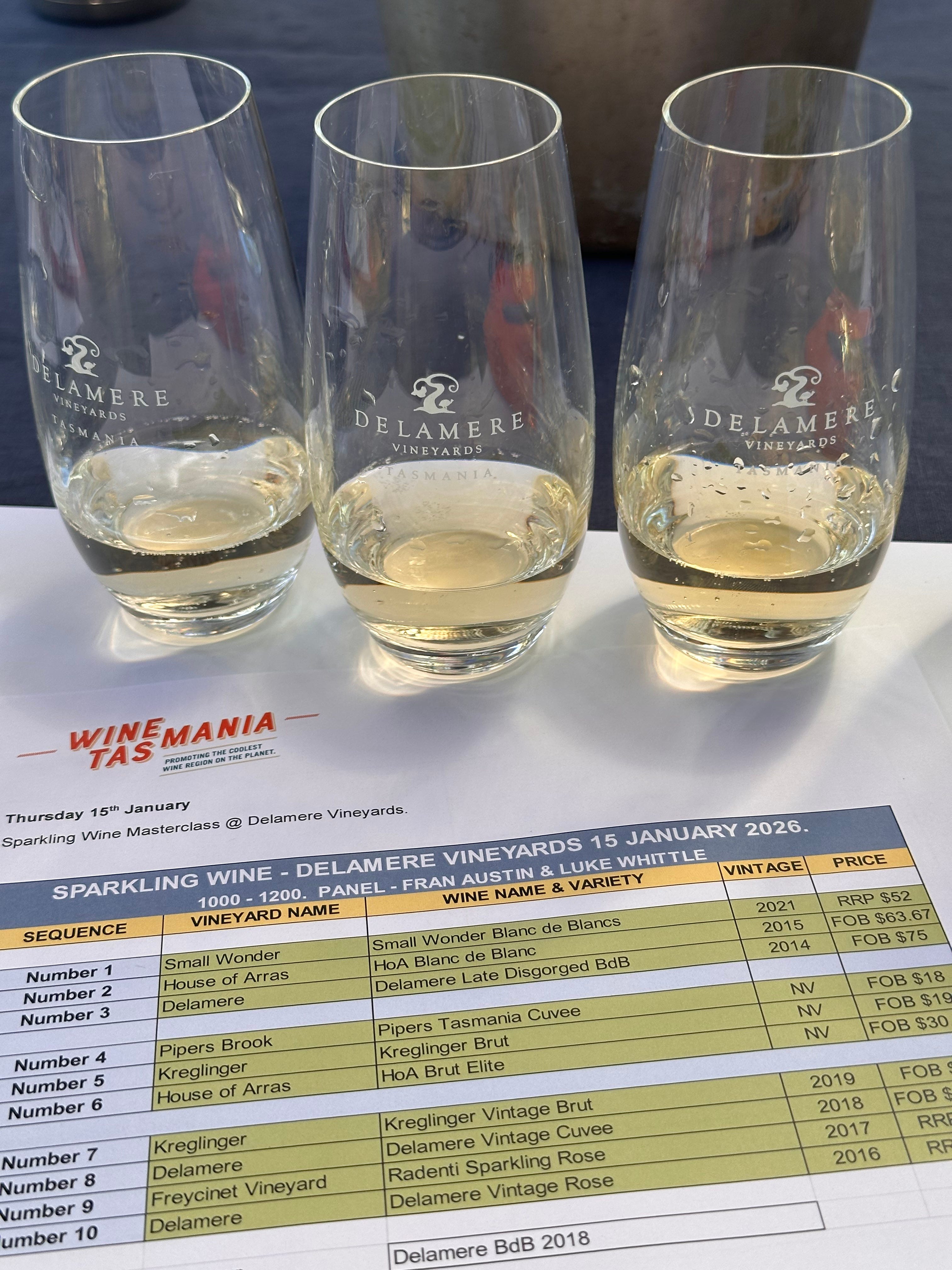
But here’s what happened when I sat down for a masterclass at Delamere Vineyards with winemakers Fran Austin and Luke Whittle, tasting through 10 sparkling wines from 6 different producers:
Not once did anyone mention Champagne.
They talked about Tasmania. About cool climate viticulture. About extended hang time and pristine fruit. About the island’s unique position at 42 degrees south latitude, the marine influence from the Bass Strait, the volcanic soils in the Tamar Valley.
They talked about what makes Tasmania Tasmania.
By constantly comparing Tasmania to Champagne, we’re actually holding it back.
Let’s Talk About Dirt
Here’s something I learned that completely changed how I think about this:
Champagne is built on chalk.
Those famous white cliffs of the Côte des Blancs are made of Kimmeridgian limestone. That’s what gives Champagne its “chalky minerality” and its particular nature of acidity.
Tasmania has basically zero chalk.
Instead, you’ve got ancient Jurassic dolerite. Volcanic basalt. Sandstones that predate most of human civilization.
When I tasted through the Pipers River-based wines at the masterclass, there was this distinct salinity. Like you could taste the Southern Ocean in the glass. Oyster shell. Brine. That savory thing that makes you want another sip.
You literally cannot make that wine on Champagne’s chalk soils.
It’s not better or worse. It’s just geologically impossible to replicate.
The House of Arras Revelation
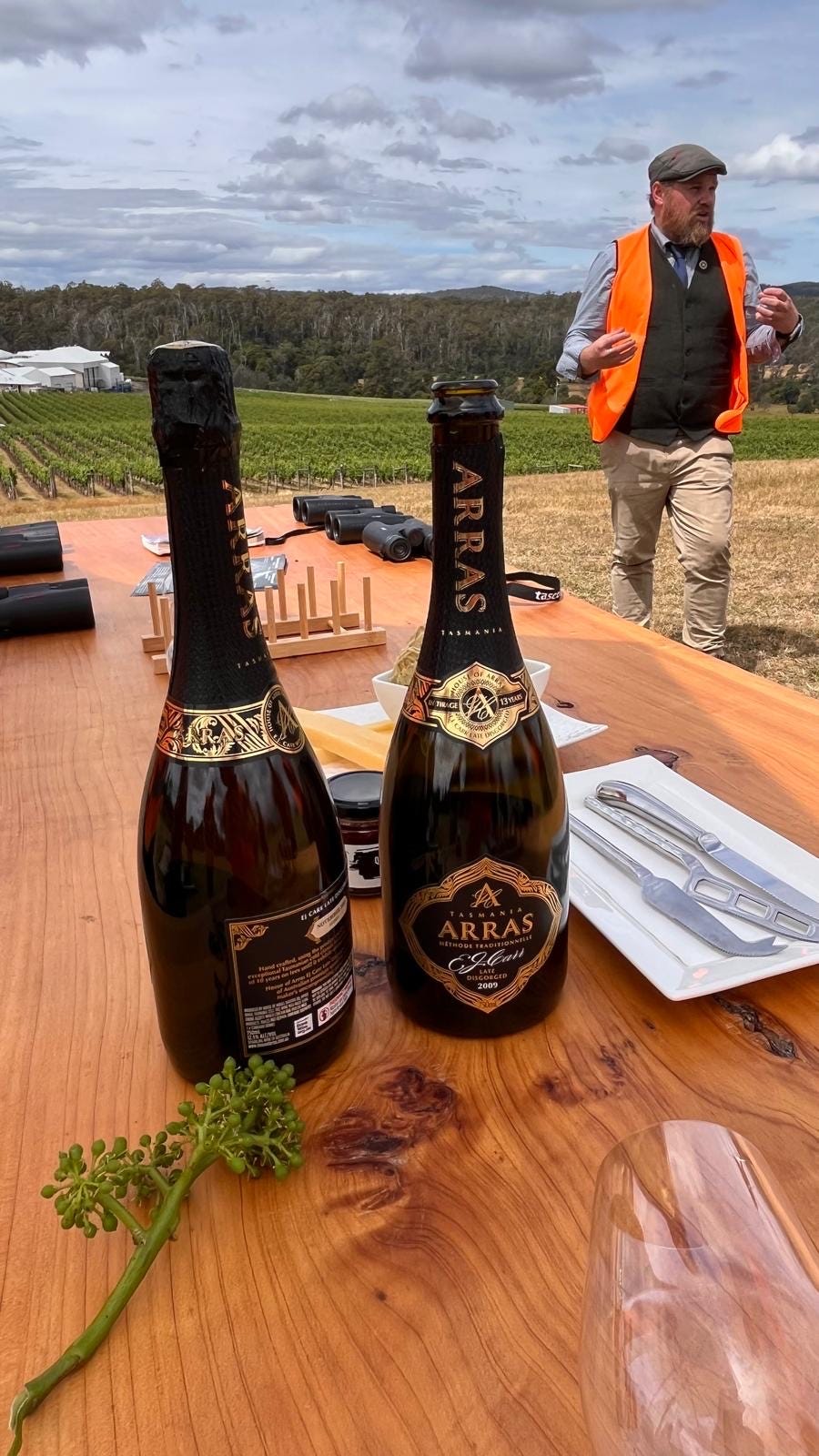
At House of Arras, I spent two hours in their vineyards with William Doggett, tasting through multiple vintages of their standout sparkling wines.
One bottle - the E.J. Carr Late Disgorged 2009 - had spent over 13 years on lees before disgorgement.
“How much does this retail for?” I asked.
“Around $250-300 AUD. The anniversary editions go up to $350.”
I almost choked on my wine.
That’s in the same range as Dom Pérignon.
But the taste goes way beyond this price. Way beyond.
The wine was extraordinary. Creamy texture from the extended lees aging. That saline, sea-spray minerality. Red apple and kumquat on the nose. A “spine of acid” (as Ed Carr, the winemaker, describes it) that cut through everything and made you want to keep drinking.
This isn’t “affordable Champagne.” This is luxury sparkling wine that happens to be made in Tasmania.
The “glass ceiling” that supposedly existed for New World sparkling - the idea that consumers would only pay $50-60 before switching to “real” Champagne - has been completely shattered.
And it should be. Because when you’re investing in 10+ years of lees aging, hand-selecting parcels from different microclimates, and working with $4000/tonne fruit, you’re not making a budget product.
The Roaring Forties
Tasmania sits at 42 degrees south latitude, right in the path of the “Roaring Forties” - those relentless westerly winds that blow across thousands of kilometers of open Southern Ocean before slamming into the island.
What this means practically:
Cool summers. The ocean acts like a massive air conditioner, preventing heat spikes and allowing grapes to ripen slowly over an extended season.
High natural acidity. The lack of extreme heat means grapes retain their malic acid, creating that “electric,” “razor-clean” acid structure that defines Tasmanian sparkling.
Long hang time. Winemakers can pick based on flavor development, not panic-harvesting before autumn rains destroy everything.
But here’s what makes it different from Champagne’s continental climate:
Moderated winters. The ocean buffers temperature extremes. No vine-killing freezes. More consistent conditions year to year (relatively speaking).
Maritime influence. Those winds deposit salt aerosols on the vines. You can literally taste the ocean in the wine.
The Blind Tasting That Changed Everything
Here’s a fun fact I learned during the trip:
In 2016, at a blind tasting in Stockholm, a panel of Swedish wine experts ranked Tasmanian sparkling wine (Pirie NV) above Grand Marque Champagnes like Veuve Clicquot.
In 2018, House of Arras E.J. Carr Late Disgorged 2004 was named the world’s best sparkling wine by Decanter, beating every Champagne entry.
When you remove the labels - when you take away the mystique of “Champagne” - Tasmanian wine doesn’t just compete.
It often wins. You can’t be an “alternative” if you’re better.
An alternative is what you buy when the real thing isn’t available. But if the “alternative” consistently beats the “real thing” in blind tastings, maybe we need to reconsider which one is which.
The Diversity You Don’t Expect
One of the biggest surprises of the trip was realizing that Tasmania isn’t one region.
It’s a collection of radically different microclimates, each producing distinct styles:
Pipers River: Humid, cool, razor-sharp acidity. Citrus-driven. This is often the backbone of premium blends.
Tamar Valley: Warmer, more sheltered. Riper fruit - peach, melon. Fuller body. The wines here provide weight and texture to blends.
Coal River Valley: Dry, warm days, cool nights. Rain shadow effect. The Pinot Noir here is powerful. Rich, structured, weighty.
Derwent Valley (where Moorilla sits): The most continental climate. Actually warmer and drier than you’d expect. Great for fuller-bodied styles.
The Evenfall Gamble (And Why It Matters)
Here’s a piece of Tasmanian wine history I learned over lunch at Evenfall:
Evenfall was the first winery to put “Tasmania” prominently on their label instead of just “Australia.”
Seems obvious now, right? But at the time, it was a risk.
The thinking was: if you emphasize Tasmania instead of Australia, you’re creating regional identity. You’re saying “this place matters.” You’re building brand equity in a name.
And it worked.
Now, nearly every serious Tasmanian producer leads with Tasmania. Not Australia. Not “Champagne-style.”
But we - buyers, sellers, marketers - are still stuck in this weird purgatory where producers know Tasmania is its own thing, but we keep reaching for the Champagne comparison because it’s the shortcut to perceived value.
It’s time we caught up.
The Asian Market Question
Okay, here’s where this gets real for me as someone working in the Singapore wine scene.
Asian wine consumers - especially the newer generation - aren’t looking for “affordable Champagne.” They’re looking for authenticity, story, and discovery.
I’ve watched this shift happen in real-time:
Five years ago: “Do you have Champagne? What’s the cheapest option?”
Now: “What’s interesting? What’s the story?”
Tasmania should be the answer to that second question.
When you lead with “it’s like Champagne but $40 instead of $120,” you’re attracting price-conscious buyers who’ll trade down the moment they find something even cheaper. You’re competing on price, which is a race to the bottom.
When you lead with “this is from an island at the edge of the world, sitting in the Roaring Forties, where vines grow on ancient volcanic basalt and produce wines that taste like the sea,” you’re attracting curious buyers who want to spend money on something special.
One of these strategies builds a premium category. The other doesn’t.
What Actually Makes Tasmania Taste Like Tasmania
After tasting 30+ wines across five days, I started to recognize a pattern - a sensory signature that kept appearing:
Fruit profile: Red apple (very specific - like Red Delicious), Japanese pear, white peach, kumquat. Distinct berry notes even in Blanc de Blancs.
Minerality: Sea spray. Oyster shell. Saline. Iodine. Crushed rock.
Autolysis character: Almond paste, nougat, fresh brioche, sourdough crust. Less of the heavy “oxidative toast” you get in some Champagnes.
Acid structure: “Razor-clean.” “Electric.” “Linear.” “A spine of acid that holds everything together.”
Texture: Creamy, almost oily in older releases. Fine, persistent bubbles.
The recurring theme was intensity without heaviness.
The fruit flavors are concentrated (thanks to the long, slow ripening season and high UV light), but the acid cuts through everything, preventing the wine from feeling fat or cloying.
The Lees Aging Obsession
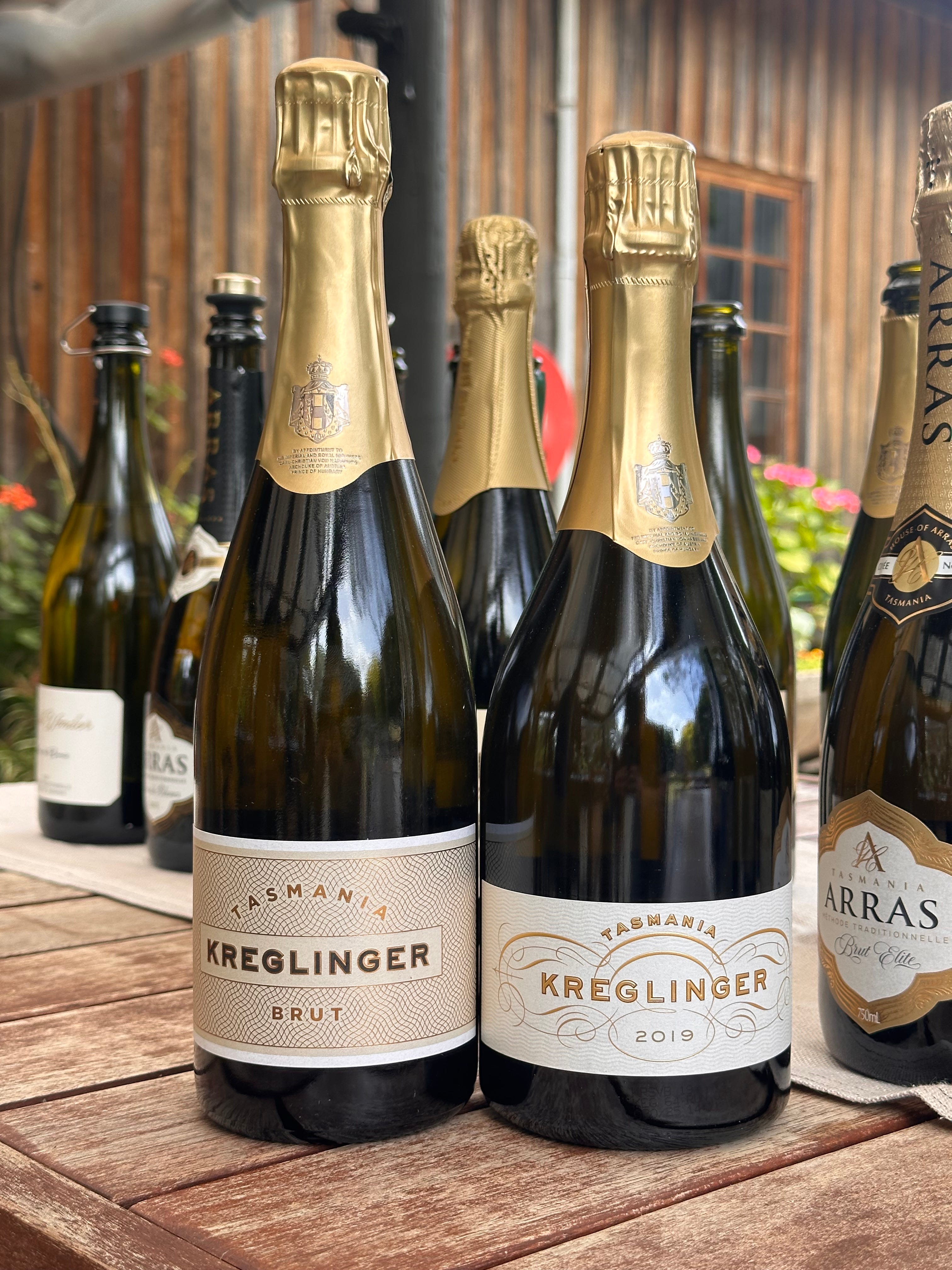
One thing that became clear across multiple visits: Tasmanian producers are absolutely obsessed with extended lees aging.
And for good reason.
The high natural acidity in Tasmanian fruit - specifically the malic acid - needs time to resolve and integrate. You can’t rush it.
Ed Carr at House of Arras pioneered this approach. Their entry-level wines see aging profiles that would qualify as “Vintage” or “Prestige Cuvée” in Champagne. The E.J. Carr Late Disgorged spends over 10 years on lees. Sometimes 16.
This extended contact with dead yeast cells (autolysis) creates those brioche, mushroom, and pastry notes that balance the sea spray salinity of the fruit.
At Josef Chromy (our final stop), winemaker Yael poured a seven-year-old vintage and said: “We could have sold this five years ago. But we waited because this is when it’s ready.”
The Export Reality (And Why You Should Care)
Here’s something that surprised me: currently, only about 4% of Tasmanian wine is exported.
The vast majority stays in Australia, consumed domestically.
But the strategic focus is shifting. Producers are looking at the UK, USA, Japan, and yes - Singapore and broader Asia.
The challenge is supply.
Tasmania produces only about 1% of Australia’s wine volume but represents 4% of its value. Vintages can vary wildly (low yields in 2022/2023, bumper crop in 2024/2025).
You can’t scale Tasmanian wine the way you can scale Prosecco or even some Champagne houses.
Limited supply means premium positioning. It means Tasmania can’t and shouldn’t compete on price with Prosecco or Cava.
It has to compete on quality with Champagne.
Final Thoughts
The wine industry loves its hierarchies. Champagne at the top. Everything else measured by how closely it resembles Champagne.
But that hierarchy is crumbling.
English sparkling proved you don’t need to be in Champagne to make world-class traditional method sparkling wine.
Tasmania is proving you don’t even need to have the same geology, climate, or philosophy.
You just need great fruit, skilled winemakers, and the patience to let the wine become what it wants to be.
After five days, 30+ wines, three masterclasses, and countless conversations with producers who are passionate about their craft, I’m convinced:
Tasmanian sparkling wine isn’t the “Champagne of the South.”
It’s just Tasmania. And that’s more than enough.
Thanks to Wine Tasmania, Sheralee Davies, Cat Carey, and every producer who shared their time and wines during this incredible trip. Special shoutout to Ed Carr, Fran Austin, Luke Whittle, William Doggett, Yael Sandler, and all the winemakers who taught me to stop comparing and start appreciating.
If you’re a wine buyer interested in Tasmanian sparkling wine, DM me. I have tasting notes and data. Lots of data.
Thank you for sharing.
Your thesis is precisely why I love wine. Each glass, each bottle, tells a story about where it's made. The land plays this extraordinary role in getting us to the final product. It's just a place to plant; it's transferring its very essence into the grape and leaving a little of itself behind.
I love extended lees sparkling wines. That's usually what I am going for when seeking them out. They could be from Georgia or Champagne or Tasmania. Give me that autolysis!!!